Expanding, relocating, or reconfiguring a warehouse puts pressure on a budget at exactly the wrong moment. For many Canadian businesses, used racking systems look like an obvious way to cut costs—and often, they are. But the decision isn’t as simple as comparing price tags.
Choosing between used and new racking requires weighing total cost of ownership, safety requirements, load capacity, and long-term operational needs. The right choice depends heavily on your specific situation. Used commercial warehouse racking can deliver excellent value when it’s professionally inspected, structurally sound, and compatible with your facility. New racking systems, on the other hand, may be the smarter investment when customization, high load capacity, or future expansion are priorities. Canadian Rack Technologies helps businesses across Canada work through exactly this decision.
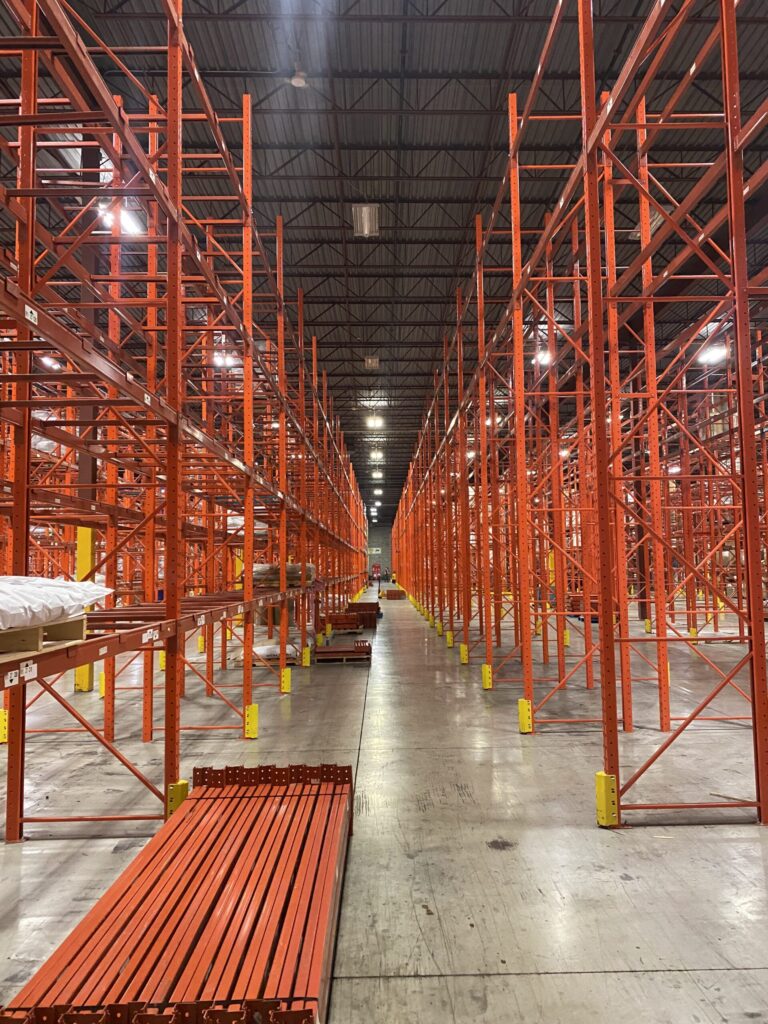
Why the Cheapest Racking Option Isn’t Always the Most Cost-Effective
Purchase price is the most visible part of the equation, but it’s rarely the whole story. When evaluating new vs. used racking systems, total cost of ownership (TCO) gives a more accurate picture. This includes installation, repairs, potential downtime, future expansion, and any safety inspection costs required to bring used racking into compliance.
The cost of used racking systems may initially appear attractive, with a used system purchased at 40–60% of the cost of new racking. However, that financial advantage can quickly disappear if the system requires significant repairs, doesn’t integrate with your existing layout, or needs re-engineering to meet current load requirements. Conversely, a well-sourced, professionally inspected used system can deliver strong long-term ROI. The key is accounting for all the costs upfront, not just the sticker price.
When Used Racking Systems Are the Better Investment
Used pallet racking systems are a practical, more cost-effective choice in several common scenarios:
- Expanding an existing warehouse without overspending, particularly when matching current rack profiles is a priority
- Temporary or seasonal storage needs, where capital expenditure on new racking isn’t justified
- Startups and growing businesses with limited capital that need functional storage infrastructure quickly
- Adding capacity during peak demand periods, such as pre-holiday inventory surges
- Matching existing racking, where sourcing compatible used components maintains system consistency
Canadian Rack Technologies stocks a large and constantly rotating inventory of inspected used RediRack-compatible pallet racking, with over 10,000 used beams typically available. For time-sensitive projects, used inventory often ships faster than new racking manufactured to order.
When New Warehouse Racking Systems Make More Financial Sense
There are situations where new warehouse racking systems are clearly the better investment, such as:
- New warehouse construction, where the layout can be purpose-built around a fresh racking system
- Heavy-duty industrial applications requiring maximum load ratings from the outset
- Automated or semi-automated warehouses, where dimensional precision and manufacturer specifications are critical
- High-seismic areas, where updated engineering standards must be met
- Customized storage configurations for specialized inventory such as long-length materials, tires, or temperature-sensitive goods
There’s also a regulatory consideration that frequently gets overlooked: older used racking frames may be subject to updated building code requirements that reduce their allowable load capacity—a topic covered in more detail in the next section.
Building Code & Load Capacity Considerations for Used Racking
This is one of the most important—and most underappreciated—factors when evaluating used pallet racking systems in Canada.
Ontario’s Building Code sets out requirements that directly affect how racking systems are engineered and rated. Used frames manufactured under previous code requirements may need to be downrated when evaluated against current standards. In some cases, older frames may be rated at approximately half their original manufactured capacity, depending on applicable engineering and code requirements.
This has a direct impact on cost-effectiveness. If you need high load capacities and your used frames can only be certified at a reduced rating, you may need more frames to achieve the same storage density, which can erode or eliminate the cost advantage of going used. Load capacity should always be verified by a qualified engineer, rather than relying on the original manufacturer’s rating or a previous installation’s specifications.
Cost Comparison: Used vs. New Racking Systems
The following table summarizes the key differences between used and new racking across the most important decision factors.
| Factor | Used Warehouse Racking | New Warehouse Racking |
| Initial Cost | Lower | Higher |
| Installation | Similar | Similar |
| Lead Time | Often Faster | Depends on manufacturing |
| Warranty | No warranty | 1-year manufacturer’s warranty on defective components |
| Customization | Moderate | High |
| Expansion Options | Depends on availability | Unlimited |
| ROI | Excellent (when inspected) | Excellent for long-term operations |
How to Reduce the Risks When Purchasing Used Racking
The used racking system benefits are real—but they depend on doing one’s due diligence before purchase. When you buy used warehouse racking, these steps can help protect your investment:
- Professional inspection: All components should be assessed for damage, deformation, or wear before installation.
- Load capacity verification: Have a licensed engineer confirm the allowable capacity under current code requirements.
- Component compatibility: Ensure beams and frames are compatible with each other and with any existing racking in your facility.
- Proper installation: Warehouse racking installation should be carried out by experienced professionals to ensure structural integrity and safety compliance.
- Warehouse layout planning: A well-designed layout maximizes density, improves workflow, and reduces the risk of forklift impacts.
- Engineering support: For larger or more complex installations, engineering sign-off provides legal protection and peace of mind.
Canadian Rack Technologies inspects all used racking inventory before sale; we would never sell components that are damaged or structurally compromised. All used material is sold in good condition and can be re-certified by a licensed engineer.
Signs It’s Time to Upgrade to New Racking Instead
Sometimes, the most cost-effective path forward is investing in new industrial storage solutions rather than patching up or expanding an aging used system. Consider upgrading if you’re experiencing or undergoing any of the following:
- Frequent repairs or recurring structural issues with existing racking
- A major warehouse redesign that makes your current layout obsolete
- Automation projects that require precise dimensional specifications
- Higher pallet weights or insufficient capacity under current building code requirements
- Compliance upgrades required by regulatory changes or insurance requirements
- Long-term expansion plans that would benefit from unlimited customization and guaranteed component availability
Used or New: A Quick Decision Guide
Still weighing your options? Here’s a straightforward summary of when each choice makes sense.
Choose used racking systems when:
- Budget is the primary constraint
- Fast warehouse expansion is needed and compatible inventory is available
- Quality-inspected stock meets your load and configuration requirements
- Matching or extending an existing system is the goal
Choose new racking systems when:
- Maximum lifespan and load capacity are required
- A fully customized warehouse layout is needed
- Heavy-duty storage or specialized inventory is involved
- Future automation or significant business growth is planned
Finding the Right Racking Solution for Your Warehouse
Making the right choice between used and new racking ultimately comes down to your budget, operational requirements, safety obligations, and growth plans. Both options can deliver excellent value—when selected and implemented correctly.
Canadian Rack Technologies supplies both professionally inspected used pallet racking and new racking solutions for warehouse storage solutions, including selective pallet racking, cantilever systems, mezzanines, and more. With industrial storage solutions available Canada-wide, the team can help businesses select the right system for their unique space, inventory, and operational requirements. Canadian Rack also offers expert guidance to help businesses make the right investment from the start, including warehouse layout planning, professional installation, and warehouse safety accessories such as guardrails, wire mesh decking, and safety netting.
Ready to find the right racking solution for your warehouse? Contact Canadian Rack Technologies for a free estimate.

About: Kevin Ausman
Kevin Ausman is the founder of Canadian Rack Technologies. He has over 30 years of experience in providing safe and efficient turn-key storage solutions and he specializes in pallet racking, pick systems, industrial shelving, mezzanines, cantilever racks, and more. Kevin is dedicated to providing great customer service, listening to client’s needs, and supplying the best products available.