Multi-tier shelving systems have become a go-to solution for warehouses that need more storage capacity without expanding their physical footprint. By building upward instead of outward, businesses can double or even triple their usable space while avoiding the cost and downtime of a facility move.
But there’s a problem that often goes unnoticed until it’s caused real damage: uneven weight distribution. Staying under a shelving system’s overall weight capacity doesn’t automatically mean loads are being handled safely. When heavy items are concentrated in one spot or positioned poorly across levels, they can put excessive stress on individual components, even if the system’s total rated capacity is never exceeded.
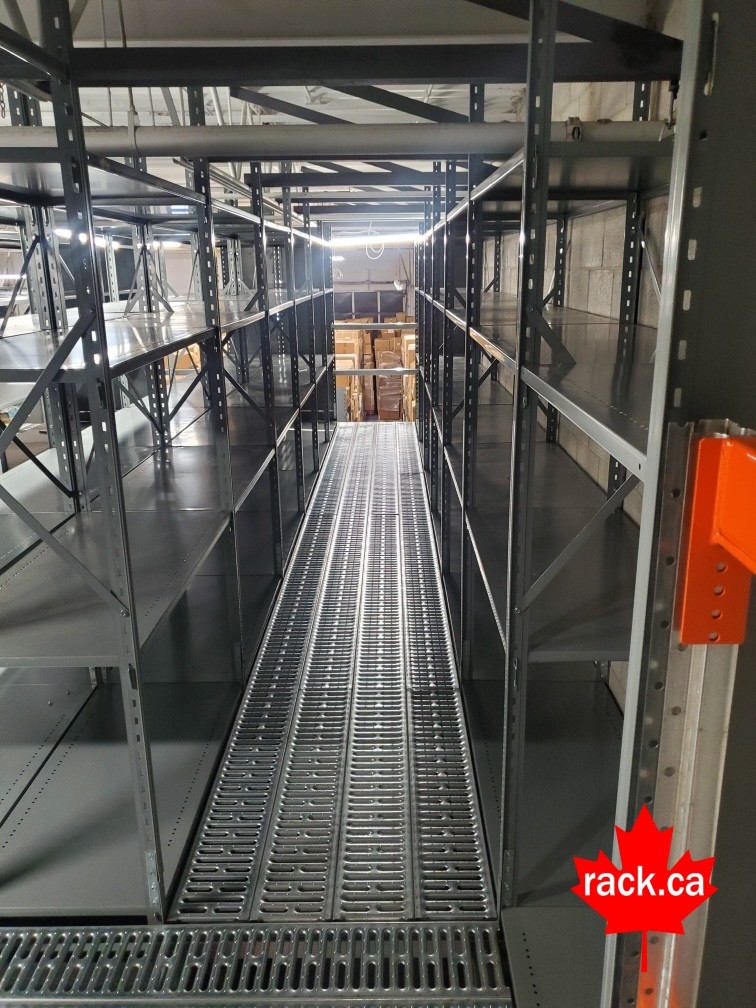
Over time, this kind of stress leads to premature wear, deformation, instability, and more frequent maintenance. In some cases, it shortens the working life of the entire system. That’s why proper shelving selection, thoughtful load planning, and consistent proper weight distribution on shelving are essential to getting long-term value from any multi-tier setup.
Why Weight Distribution Matters in Multi-Tier Shelving
Every shelving system relies on a chain of components working together, shelves, supports, frames, and structural connections, to transfer weight safely down to the floor. When a load is placed on a shelf, its weight travels through the frame and connection points before reaching the ground. This is why the difference between total load capacity and properly distributed load capacity matters so much.
A shelving unit rated for a certain total weight assumes that weight is spread out in a reasonably even way. Concentrate too much of it in one area, and you create localized stress that the system wasn’t necessarily designed to handle in that specific spot. This is especially true across multiple levels, where uneven loading on one tier can affect the stability and performance of the tiers above and below it. Because of this, load distribution needs to be a core part of planning any warehouse multi-tier shelving layout, not an afterthought.
What Happens When Weight Is Distributed Unevenly?
Uneven loading doesn’t always produce immediate, obvious problems. More often, it creates a slow accumulation of issues that surface over months or years. Some of the most common consequences include:
- Excessive stress on shelving components, particularly at connection points and support beams
- Shelf deflection and deformation, where shelves begin to sag or bend under concentrated loads
- Reduced system stability, which can affect the entire structure, not just the overloaded section
- Faster wear and more frequent maintenance, driving up long-term operating costs
- Increased safety risks for workers retrieving items or working near affected shelving
None of these issues tend to appear overnight, but each one compounds the others, which is exactly why uneven weight distribution deserves more attention than it typically gets.
Common Causes of Uneven Weight Distribution on Multi-Tier Shelving
Understanding why uneven loading happens in the first place makes it easier to prevent. In most warehouses, the root causes come down to a handful of recurring habits and oversights:
- Placing heavy items in one concentrated area for convenience
- Overloading individual shelves or levels beyond what they’re designed to hold
- Storing dense products without factoring in their actual weight
- Ignoring manufacturer load ratings for specific shelves or tiers
- Frequent inventory changes that shift weight patterns without a corresponding review of the layout
- Poorly planned shelving layouts that don’t account for how products will actually be stored
Many of these causes are tied to everyday operational decisions rather than one-time errors, which means the risk can build gradually as inventory and staffing change.
How Uneven Loading Can Shorten Multi-Tier Shelving’s Service Life
The connection between uneven loading and reduced service life becomes clearer when you trace specific problems through to their long-term outcomes. The table below breaks down how common loading issues escalate over time.
| Loading Problem | What It Can Cause | Long-Term Impact |
|---|---|---|
| Concentrated heavy loads | Localized stress | Component wear |
| Excessive weight on one level | Shelf deflection | Deformation |
| Uneven side-to-side loading | Imbalance | Reduced stability |
| Repeated overloading | Structural stress | Premature replacement |
| Improperly configured shelving | Inefficient loading | Reduced storage efficiency |
As this shows, the path from a small loading habit to a costly structural issue is often shorter than warehouse managers expect.
How to Distribute Weight Properly Across Multi-Tier Shelving
The good news is that uneven weight distribution is largely preventable with the right habits and planning. Consider the following practices as a starting point:
- Place heavier items strategically, generally lower down and toward the centre of a shelving unit, to reduce strain on upper levels and support structures.
- Spread loads across the shelf rather than clustering them in one section.
- Follow rated load capacities for each shelf and tier, not just the system as a whole.
- Consider the type of inventory being stored; dense or irregularly shaped products may require different placement strategies.
- Train employees on proper loading techniques so good habits are followed consistently, not just when a manager is watching.
Combined with warehouse safety accessories like guardrails and load-rating signage, these practices go a long way toward protecting both your shelving investment and your team.
When Is It Time to Reassess Your Multi-Tier Shelving System?
Even a well-designed shelving layout can become outdated as a business grows and changes. Here are some signs that it may be time for a closer look at your current configuration:
- Inventory weight has increased since the system was first installed
- Product dimensions have changed
- Storage volume has grown
- Employees frequently overload certain levels
- Shelving shows repeated damage
- The warehouse has added new product lines
- Current shelving no longer supports workflow efficiently
- The company is expanding vertically
- The existing configuration wasn’t designed for current inventory requirements
Any one of these signs of overloaded shelving is worth investigating on its own. Taken together, they’re a strong indication that a shelving reassessment should move up the priority list.
Why Choose Canadian Rack Technologies for Industrial Multi-Tier Shelving
With over 25 years of experience in industrial storage solutions Canada-wide, Canadian Rack Technologies Inc. brings deep expertise to every commercial warehouse racking project. As a Canadian-owned and operated company, and a value-added reseller for Metalware multi-tier systems, Canadian Rack Technologies designs, supplies, and installs industrial multi-tier shelving solutions custom-built for each client’s specific operational needs.
Beyond installation, the company offers engineering and CAD design services, routine safety inspections, and warehouse racking installation backed by a full letter of certification. This end-to-end approach helps ensure that weight distribution, layout, and load capacity are all accounted for from the very beginning, rather than corrected after problems arise.
Protecting Your Shelving Investment Starts with Smart Load Planning
Choosing the right multi-tier shelving systems at the planning stage makes it far easier to manage capacity, keep inventory organized, and support future warehouse growth. If your current warehouse storage shelving setup is showing signs of strain, or if your business has outgrown its original configuration, it’s worth exploring professionally designed solutions built for your specific needs.
Get the right multi-tier shelving solution with Canadian Rack Technologies. Contact us today for a free estimate.

About: Kevin Ausman
Kevin Ausman is the founder of Canadian Rack Technologies. He has over 30 years of experience in providing safe and efficient turn-key storage solutions and he specializes in pallet racking, pick systems, industrial shelving, mezzanines, cantilever racks, and more. Kevin is dedicated to providing great customer service, listening to client’s needs, and supplying the best products available.