Consumer habits are shifting rapidly, and retail distribution centres are feeling the pressure. Managers are constantly battling the challenge of rapid SKU growth alongside the relentless demand for same-day and next-day fulfillment. Compounding this situation is the reality of seasonal inventory surges and promotional cycles, which test the limits of facilities operating with a fixed footprint and rising real estate costs. To keep operations moving smoothly, facilities require a robust structural backbone. Strategic commercial pallet racking is that backbone, providing the essential infrastructure needed to turn chaotic warehouses into highly efficient distribution hubs.
Unique Storage Challenges in Retail Distribution Centres
Running a retail warehouse requires the balancing of high incoming volume with lightning-fast outbound shipments. When floor space is limited, adapting to these demands requires strategic retail warehouse optimization to keep goods accessible without expanding the building’s physical footprint.
Facility managers face several distinct obstacles when managing modern retail inventory:
- High SKU volume & fast inventory turnover: Constantly expanding product lines require highly organized, accessible storage to prevent picking delays.
- Seasonal demand spikes: Holidays and promotional cycles create temporary, massive influxes of inventory that must be stored safely and dispatched quickly.
- Order fulfillment speed expectations: Consumers expect their orders immediately, leaving zero margin for error in the picking and packing process.
- Space constraints & rising real estate costs: Expanding a facility is often cost-prohibitive, forcing managers to look upward and maximize their existing vertical square footage.
What Is Commercial Pallet Racking?
At its core, a warehouse racking system is a heavy-duty framework of shelving units designed specifically to hold palletized materials. These structures allow forklifts and other material handling equipment to efficiently store, organize, and retrieve heavy loads using vertical space. This framework is built to maximize warehouse density and streamline inventory retrieval.
Warehouse racking systems are primarily constructed using vertical uprights, horizontal load beams, wire decking for support, and heavy-duty floor anchors to ensure stability.
Whether storing bulk liquids, appliances, or palletized electronics, heavy-duty pallet racking safely supports substantial weight capacities. Moreover, these modular structures are scalable; they can be expanded, reconfigured, or relocated as a distribution centre’s inventory needs evolve over time.
Why Commercial Pallet Racking Matters in Retail Distribution
Investing in proper warehouse storage solutions does much more than simply keep boxes off the floor. The right structural layout directly influences the profitability, speed, and safety of a retail distribution centre.
Implementing a high-quality storage framework offers several tangible operational benefits:
- Maximizes vertical space: It transforms unused overhead air into valuable storage capacity, mitigating the need for expensive facility expansions.
- Improves inventory organization: Products are neatly categorized and easily tracked, reducing the time workers spend searching for misplaced SKUs.
- Enhances order picking speed: Clear aisles and organized bays allow material handlers to load and unload products with greater efficiency.
- Supports inventory safety: Properly engineered and anchored racks prevent product damage and workplace accidents caused by falling goods.
- Increases operational ROI: By minimizing delays, preventing product loss, and avoiding expansion costs, high-quality racking delivers a strong return on investment.
Types of Commercial Pallet Racking for Retail Distribution
Because no two distribution centres operate identically, warehouse pallet racking systems come in various configurations to suit specific workflows. Selecting the right type depends entirely on your product turnover rate, load sizes, and handling equipment.
Here are the most common configurations used to optimize retail warehouses:
- Selective Pallet Racking: The most common configuration, selective pallet racking systems allow direct access to every single pallet, making them ideal for facilities with highly diverse, fast-moving SKUs.
- Drive-In / Drive-Through Racking: Designed for high-density storage of similar products, this layout allows forklifts to drive directly into the bays, maximizing space at the expense of selective access.
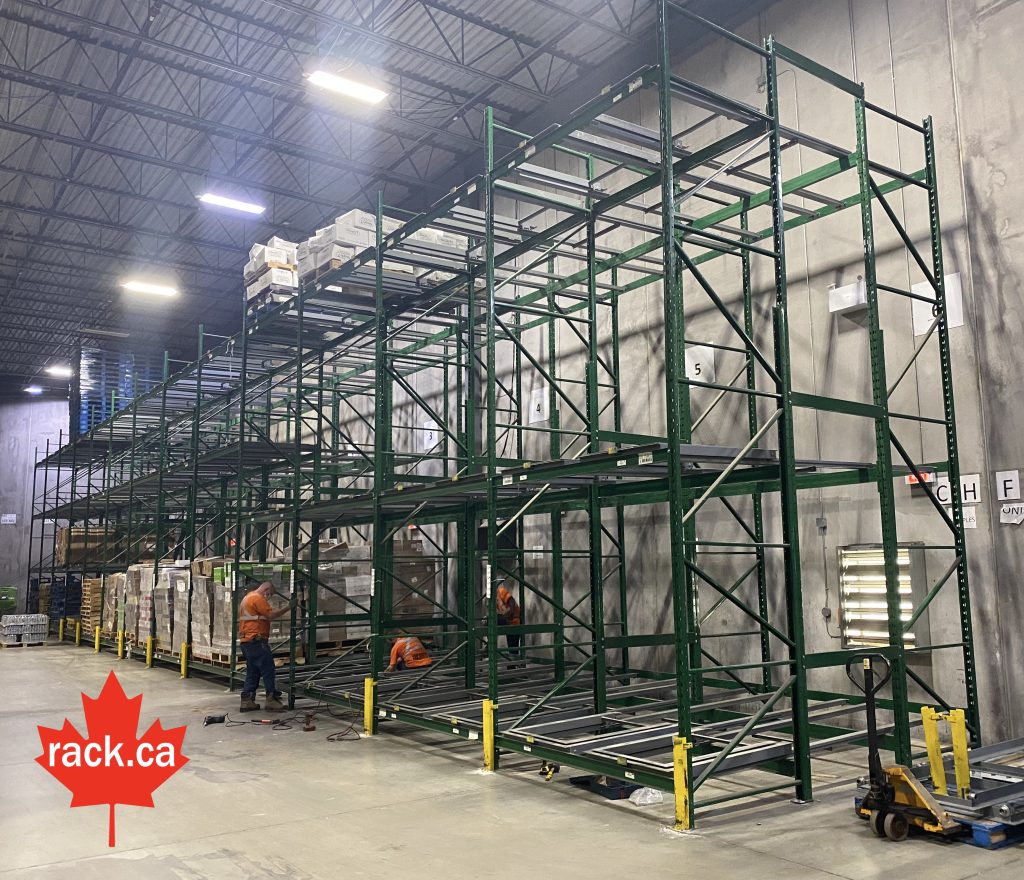
- Push-Back Racking: Operating on a Last-In, First-Out (LIFO) model, this system uses inclined rails and nested carts to store pallets multiple deep, offering a balance of high density and accessibility.
- Pallet Flow Racking: Using a First-In, First-Out (FIFO) method, gravity rollers automatically advance pallets to the picking face, which is perfect for perishable goods or high-volume items.
How Poor Pallet Racking Impacts Retail Performance
Substandard or poorly designed industrial pallet racks can create a domino effect of operational failures. When a storage layout fights against your workflow rather than supporting it, the entire distribution network suffers.
Failing to maintain a properly engineered racking layout typically results in the following operational hazards:
- Congested aisles: Poor layout planning causes bottlenecks, restricting forklift movement and creating safety hazards.
- Slow picking times: If items are difficult to access, fulfilling orders takes longer, which frustrates customers.
- Higher labour costs: When workers spend extra time navigating a poorly designed warehouse, operational expenses skyrocket.
- Inventory damage: Overloaded or poorly secured racks can lead to product slippage, resulting in crushed or unsellable goods.
- OSHA and provincial safety violations: Failing to adhere to structural building codes and workplace safety standards can result in hefty fines and facility shutdowns.
- Lost revenue due to fulfillment delays: Inefficient storage ultimately translates to delayed shipping, lost sales, and damaged brand reputation.
Maintenance & Safety Best Practices for Retail Distribution Centres
Installing commercial pallet racking is only the first step; maintaining it is crucial for long-term safety and compliance. Rigorous upkeep protects both your workforce and your bottom line.
To maintain a secure and compliant facility, managers should enforce these critical safety protocols:
- Regular rack inspections: Schedule routine visual checks and annual professional audits to identify bent braces, missing safety pins, or leaning frames.
- Load capacity labeling: Ensure every rack clearly displays its maximum weight limit to prevent workers from overloading beams.
- Rack guards & column protectors: Install steel guards at the base of uprights to absorb impact from accidental forklift collisions.
- Employee safety training: Educate all material handlers on proper loading techniques, hazard reporting, and safe equipment operation.
- Repair vs. replacement decisions: Address damaged structural components immediately, consulting with professionals to determine if a fix or a full replacement is required.
Upgrade Your Retail Distribution Centre with Canadian Rack
Retail distribution centres are under immense pressure to overcome space constraints, accommodate rapid SKU expansion, and meet the growing demand for faster fulfillment. Without a strategic infrastructure, these challenges can easily overwhelm a facility.
Commercial pallet racking is the definitive solution, turning cramped, inefficient spaces into safe, high-capacity fulfillment engines. For over 29 years, Canadian Rack Technologies has provided expert design, installation, and maintenance for distribution centres across the Greater Toronto Area and beyond.
If you are ready to maximize your warehouse efficiency, contact Canadian Rack Technologies today for a consultation and secure a customized storage solution built for your exact needs.

About: Kevin Ausman
Kevin Ausman is the founder of Canadian Rack Technologies. He has over 30 years of experience in providing safe and efficient turn-key storage solutions and he specializes in pallet racking, pick systems, industrial shelving, mezzanines, cantilever racks, and more. Kevin is dedicated to providing great customer service, listening to client’s needs, and supplying the best products available.